
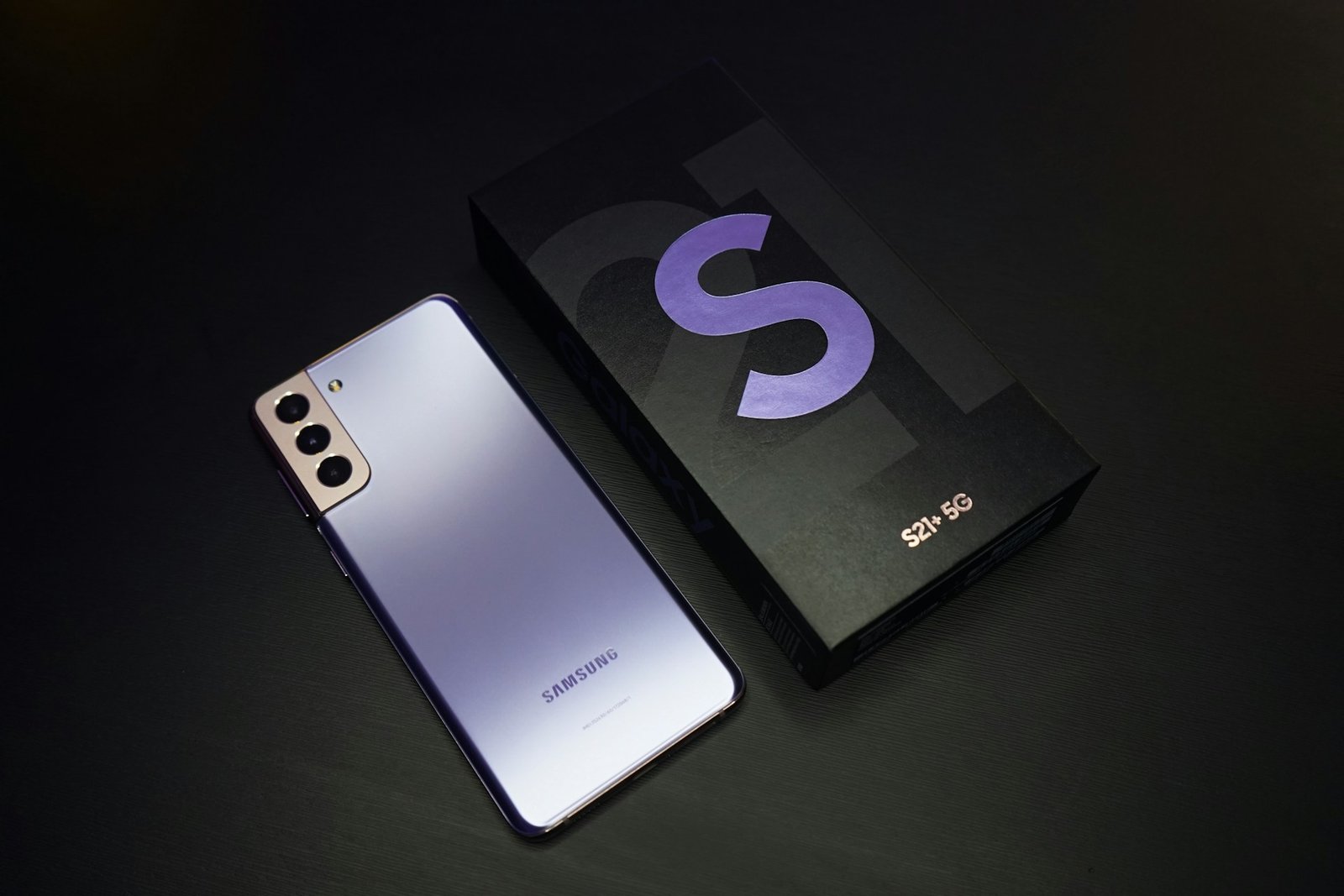
South Korea’s Fair Trade Commission (FTC) has imposed a 20.1 billion won ($15.2 million) fine on Samsung Electronics for deceptive advertising. The antitrust watchdog ruled that the tech giant promoted top-tier gaming performance on its flagship mobile devices while concealing software limits that throttled processor speeds during gameplay.(koreajoongangdaily)
The regulatory action covers promotional campaigns conducted between January 2021 and March 2022 for the Galaxy S21 series, Galaxy S22 series, and Galaxy Tab S8 tablets. During product launches, online marketing, and video advertisements, Samsung highlighted high-end capabilities with slogans promising “the ultimate mobile gaming experience”.
However, an FTC investigation revealed that the devices utilized a pre-installed feature called Game Optimizing Service (GOS). Unlike standard thermal management systems that adjust performance as a device heats up, GOS automatically triggered preset performance caps as soon as demanding games launched, regardless of actual device temperature. On the Galaxy S22, for instance, launching PUBG: New State reduced top CPU speeds from 2.99 GHz down to 0.94 GHz—roughly a 69 percent reduction. Performance caps affected dozens of popular titles across the line of devices without giving users an official setting to disable the service.
The FTC concluded that Samsung misled buyers by concealing these strict speed caps, directly interfering with consumer purchasing decisions at a time when mobile gaming capabilities served as a key selling point for premium smartphones. While the initial investigation examiner recommended a penalty of up to 64.4 billion won, the FTC lowered the final fine in recognition of Samsung’s voluntary software updates that subsequently removed the speed caps and gave users performance controls.
Samsung announced plans to challenge the decision through legal action. The company contended that GOS was an optimization feature designed to ensure stable long-term performance and heat management rather than a mechanism for deceptive marketing. Samsung further criticized the ruling’s timing, pointing out that related domestic and international lawsuits have already concluded without liability findings, and initial consumer complaints to the FTC have since been withdrawn. Samsung’s legal representatives reiterated that evaluating evolving optimization software based on a snapshot of past settings fails to account for continuous product improvements.