
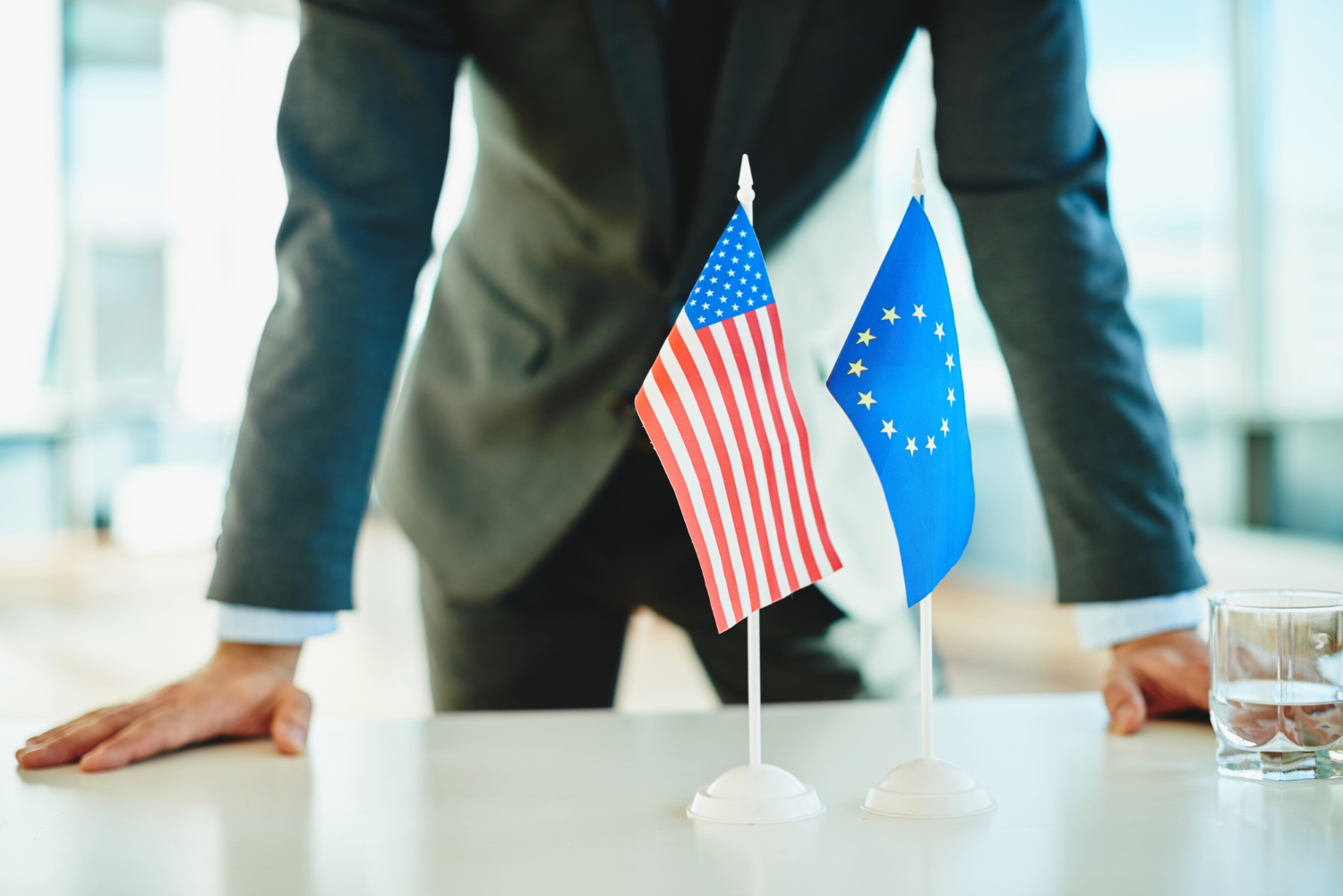
Fines imposed by the European Union on American companies have become the most important source of economic tension between Washington and Brussels, according to a senior official from the U.S. State Department.(Reuters)
Jacob Helberg, the U.S. Under Secretary of State for Economic Growth, said the repeated penalties targeting U.S. firms—particularly under the EU’s Digital Markets Act (DMA)—are a growing point of friction in the transatlantic relationship. Speaking to journalists during a visit to Europe, Helberg argued that the scale and frequency of these sanctions are creating strain in economic ties between the two allies.
Helberg described the fines as “very onerous punitive” measures and suggested that their impact is being felt across broader economic cooperation between the United States and the European Union. Washington is also concerned that another round of penalties against American technology companies could be announced in the near future.
The remarks came as Helberg travels across Europe seeking to strengthen economic partnerships and promote collaboration in emerging technologies. Part of the mission is to encourage what U.S. officials describe as a balanced and predictable regulatory environment for companies operating across both markets.
Despite the concerns raised over EU enforcement actions, Helberg indicated that discussions with European institutions had been constructive. He noted that talks with the European Commission included conversations about strengthening cooperation with European firms that play a crucial role in global supply chains. According to the official, these areas could provide opportunities to deepen transatlantic economic collaboration.
However, he suggested that progress could be faster if regulatory disputes were not simultaneously complicating the relationship. In particular, the Digital Markets Act—designed to curb the market power of large technology platforms—has become a focal point of U.S. concerns, as many of the companies subject to the regulation are American.
During his visit, Helberg is also scheduled to meet with executives from Dutch semiconductor equipment manufacturer ASML, Europe’s most valuable listed company. The firm plays a central role in the global semiconductor supply chain, making it strategically important to both the United States and Europe. Helberg declined to comment on whether Washington is satisfied with current export control arrangements between the Netherlands and the United States regarding ASML’s sales of advanced chipmaking equipment to China.
The issue of EU competition enforcement and regulatory initiatives has increasingly become part of broader geopolitical and economic discussions between the United States and the European Union, particularly as both sides attempt to balance cooperation with concerns over industrial policy, technology leadership, and fair market access.