
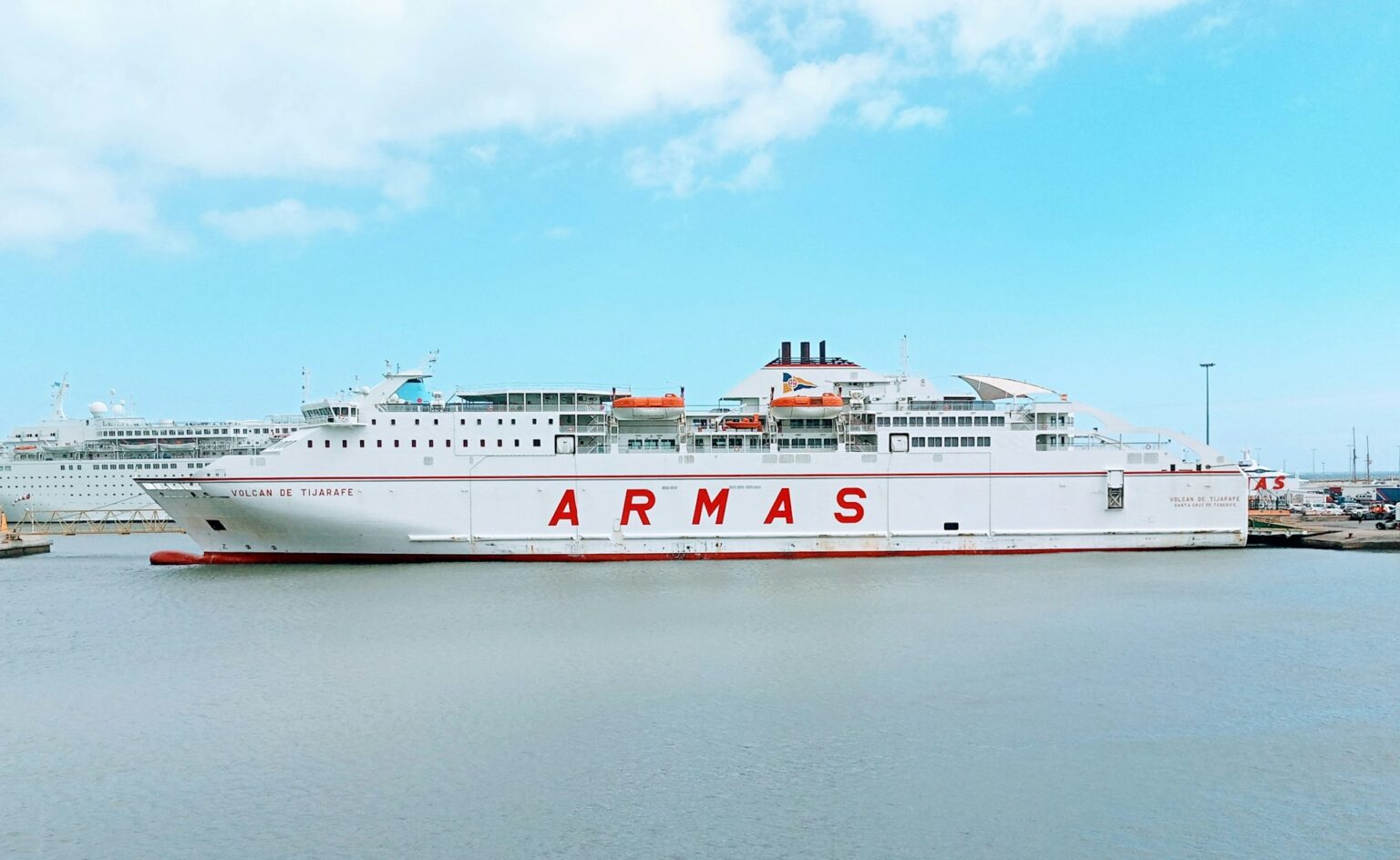
Spain’s National Markets and Antitrust Commission (CNMC) has greenlit Balearia’s acquisition of specific assets from rival ferry operator Naviera Armas in the Alborán Sea region. The regulatory approval, finalized after a rigorous second-phase investigation, is not yet absolute. The decision has been forwarded to the Ministry of Economy, Trade, and Enterprise, which will determine whether to escalate the matter to the Council of Ministers to evaluate the transaction based on broader general interest criteria outside of standard antitrust laws.
The acquisition heavily impacts regular maritime passenger and roll-on/roll-on (ro-ro) cargo transport markets, specifically connections between the Southern Spanish Peninsula and Melilla, as well as the popular Almería to Nador route. Without regulatory intervention, the exit of Armas would create an outright monopoly on the Peninsula-Melilla routes for both cargo and passengers. The CNMC warned that Balearia would have both the incentive and ability to eliminate less profitable sailing frequencies, lower service standards, and hike prices during peak holiday seasons when maximum public service obligation (OSP) tariffs do not apply. Additionally, the merger would eliminate competitive bidding for future state-subsidized public service contracts, as Armas and Balearia have historically been the two main bidders in the region.

A similar competitive threat was identified for the Almería-Nador corridor. The acquisition consolidates Balearia as the dominant operator on this route, leaving Grandi Navi Veloci (GNV) as its only competitor, and only during the busy summer months. To alleviate these antitrust concerns, Balearia initially proposed a package of voluntary commitments. These included self-imposed price caps on the Melilla routes, pledges to maintain the service quality previously offered by Armas, investments to upgrade the acquired fleet, environmental sustainability initiatives, and enhancements to the overall passenger experience.
However, the CNMC deemed Balearia’s proposals insufficient, noting that they lacked a clear timeline and completely ignored the risk of price gouging on the Nador route. In response, the antitrust watchdog has imposed mandatory conditions that will remain in effect for at least five years, with the possibility of a five-year extension. Under these rules, Balearia is prohibited from hiking prices for cargo transport and passenger fares during holiday periods on the Southern Peninsula-Melilla routes. Furthermore, a matching price-cap and quality-maintenance system has been mandated for the Almería-Nador route for as long as Balearia operates it alone or with just one competitor. The CNMC reserves the right to review and alter these conditions ahead of schedule if significant market changes occur, such as a new competitor entering the waters or the introduction of year-round government price controls.