
Unilever has confirmed it is in discussions with McCormick & Company regarding a potential transaction involving its foods division, following market speculation about a possible deal. The company stated that it has received an inbound offer but cautioned that there is no certainty an agreement will be reached.
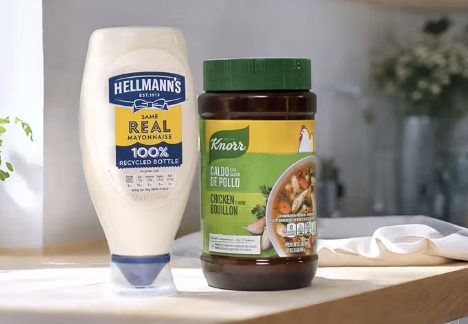
The development comes amid growing scrutiny of Unilever’s strategic direction as it seeks to reshape its portfolio. While acknowledging the approach, the company says that its foods business remains a strong and attractive asset, underpinned by leading brands and solid financial performance. Unilever’s foods division — which includes well-known brands such as Hellmann’s, Knorr, Marmite and Colman’s — recorded sales of more than €12.9 billion last year, accounting for about one quarter of the company’s overall revenue. Management reiterated confidence in the division’s future, whether retained or sold.
Earlier reporting by The Wall Street Journal suggested that a transaction could be structured as an all-stock deal and potentially finalized within weeks if negotiations progress smoothly. The report also indicated that the foods unit could be valued at tens of billions of dollars. Such a valuation would significantly exceed McCormick’s current market capitalization, estimated at around $14.8 billion, pointing to the scale and complexity of any potential combination. Unilever, however, declined to comment on valuation, deal structure, or timing.
A transaction would represent a major step in Chief Executive Fernando Fernandez’s strategy to focus the group on higher-margin segments, particularly beauty and personal care. This shift has already been signaled by the spin-off of Unilever’s ice cream business last year, as the company looks to streamline operations and boost profitability.
The possible tie-up also highlights renewed consolidation dynamics within the global food sector. According to earlier reporting by the Financial Times, Unilever had previously explored a combination of its food assets with the condiments business of Kraft Heinz, although those discussions ultimately did not advance.
If a deal with McCormick were to materialize, it would bring together complementary product portfolios, including McCormick’s Cholula with Unilever’s established condiments range. Such a combination could create a significant global player in sauces, seasonings, and flavorings, with enhanced scale and distribution capabilities.
For now, discussions remain ongoing, with investors and industry observers closely watching whether negotiations will translate into one of the most significant food sector deals in recent years.