
In the high-stakes world of industrial procurement, one usually expects secret meetings to be shrouded in complex algorithms and shadowy offshore accounts. However, according to a recently unearthed investigation by the Competition Commission of India (CCI), all it took to unravel a decade of alleged price-fixing was a sudden, collective devotion to the number seven. (Reuters)
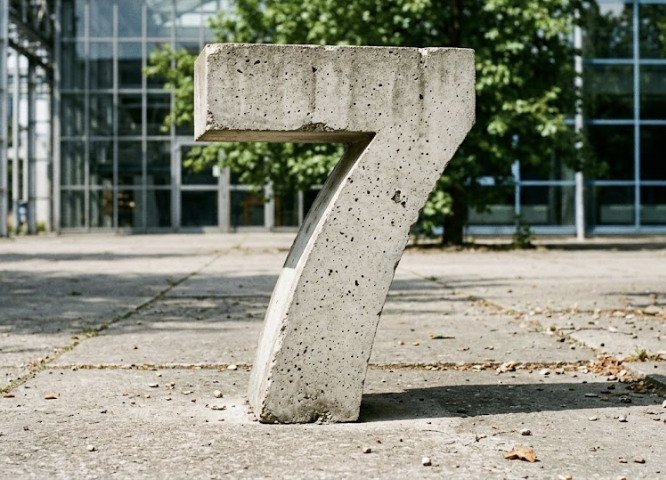
The saga began in 2018 when the Oil and Natural Gas Corporation (ONGC), India’s premier oil explorer, opened a tender for oil well cement. Expecting a robust display of free-market competition, officials were instead met with a mathematical miracle: every single bid from the competing firms—Dalmia Cement, Shree Digvijay, and India Cements—landed at exactly 7,000 rupees per metric ton. When a suspicious ONGC queried the identical pricing, an executive at India Cements offered a defense that was less “Adam Smith” and more “Zodiac Signs,” claiming the bid was “supported by the numerology factor of 7.”
While seven may be a lucky number in many cultures, it proved remarkably unlucky for the firms involved. The CCI’s five-year probe, detailed in a 90-page report reviewed by Reuters, suggests that this wasn’t divine intervention, but rather a meticulously coordinated “cartel period” stretching back as far as 2007.
Calculating the Competition (Out of the Equation)
The investigation paints a picture of corporate cooperation that would be heartwarming if it weren’t illegal. Rather than competing on price or quality, executives allegedly spent their time sharing Excel sheets to calculate rail freight distances and carve up territories like a Sunday roast. The goal was simple: ensure that revenue and volumes were distributed with the kind of fairness usually reserved for kindergarten snack time.
The report highlights the “active involvement” of top-tier leadership, including industry titans like N. Srinivasan and Y.H. Dalmia. In one particularly bold instance of neighborly help, a senior vice president from Shree Digvijay reportedly visited the offices of his “rival” at Dalmia to assist directly with their tender filing. It is a rare level of professional courtesy to help your competitor fill out the paperwork used to beat you—unless, of course, you’ve already agreed on who wins.
Patriotic Profits
Beyond mere price-fixing, the cartel allegedly displayed a fierce, if somewhat self-serving, sense of nationalism. The CCI found evidence that the domestic firms worked in concert to squeeze out foreign players such as Texas-based SLB and UAE’s Classic Oil Field Chemicals. By flagging “prickly issues” regarding certifications and lobbying the government to avoid throwing Indian parties into the metaphorical “bathtub,” the companies sought to ensure the market remained a private club.
At one point, the investigation concludes, the firms even attempted to pressure ONGC into canceling foreign bids by threatening to restrict the supply of cement. It was a classic “take our prices or take nothing” gambit that has now landed them in the regulator’s crosshairs.
The Cost of a “Lucky” Guess
The financial fallout of this numerological fixation is becoming clear. Following the release of these details, shares in the involved companies took a visible tumble, with Shree Digvijay and India Cements seeing drops of 5.4% and 4.4% respectively.
The legal stakes are even higher. The CCI holds the power to levy fines of up to 10% of a company’s turnover for each year of wrongdoing or three times the profit earned during the cartel period. For firms like Dalmia Bharat, which recorded $1.5 billion in revenue last year, the final bill could be significantly more expensive than a consultation with a numerologist.
As the companies prepare their final responses to the watchdog, the case serves as a stern reminder to the Indian corporate sector: the regulator is no longer just watching Silicon Valley giants. Domestic heavyweights are being held to the same standard, and in the eyes of the law, there is no lucky number high enough to justify a lack of competition.