
The European Commission has imposed fines totalling approximately €72 million on three automotive starter battery manufacturers—Exide, FET (including its predecessor Elettra) and Rombat—as well as on the industry trade association EUROBAT, for their participation in a long-running cartel in breach of EU antitrust rules. The infringement concerned the sale of automotive starter batteries to car and truck manufacturers across the European Economic Area and may have resulted in higher production costs for vehicles in Europe.
The Commission found that, for more than twelve years, the manufacturers coordinated their conduct together with EUROBAT and Clarios, formerly known as JC Autobatterie. The cartel involved anticompetitive agreements and concerted practices designed to restrict competition by aligning pricing behaviour toward automotive original equipment manufacturers. Clarios was not fined, having revealed the existence of the cartel to the Commission under the EU leniency programme, which grants full immunity to the first company to cooperate and provide decisive evidence.
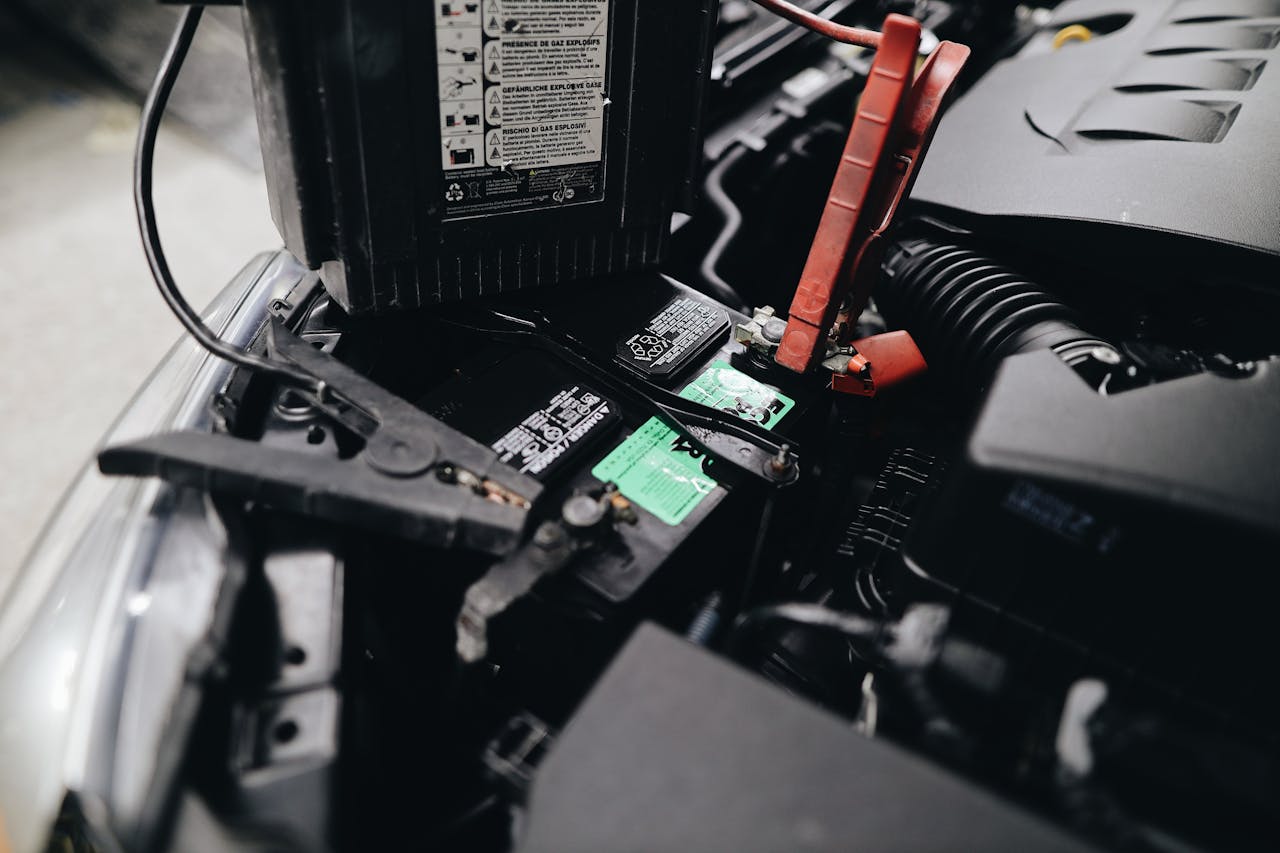
Automotive starter batteries, which supply power to start engines and operate electrical systems in vehicles with combustion engines, rely heavily on lead as their main input material. Because automotive-grade lead requires higher purity and specific additives, manufacturers pay a premium to suppliers to obtain lead of sufficient quality. The Commission’s investigation established that the cartel participants agreed to calculate and publish so-called “EUROBAT premiums” based on their lead purchasing prices in an industry publication and to apply these premiums systematically in negotiations with automotive manufacturers. While surcharges to reflect raw material cost fluctuations can be lawful, the Commission concluded that secretly coordinating such premiums across the industry amounted to illegal price fixing.
According to the decision, the coordinated use of these premiums ensured that the resulting surcharges charged to customers were higher than they would have been under normal competitive conditions. The Commission qualified the conduct as a single and continuous infringement by object under Article 101 of the Treaty on the Functioning of the European Union and Article 53 of the EEA Agreement, both of which prohibit agreements that restrict competition within the Single Market.
In determining the fines, the Commission applied its 2006 Guidelines on fines and took into account the seriousness and duration of the infringement, its geographic scope across the EEA, and the value of sales of automotive starter batteries to vehicle manufacturers and authorised repair networks. Exide received a €30 million fine, while Rombat and FET were fined €20.2 million and €6.1 million respectively, with reductions reflecting their cooperation under the leniency programme. EUROBAT was fined €125,000 for facilitating the cartel, underscoring the Commission’s position that trade associations bear responsibility for ensuring they do not enable collusion among their members. The fine imposed on Dofin, a former parent company of Elettra, was capped at zero due to its lack of economic activity.
The Commission also assessed claims of inability to pay and granted a reduction to one company after examining its financial situation. Several undertakings were allowed to pay their fines in instalments. The proceeds from the fines will be paid into the EU budget, thereby reducing Member States’ contributions in subsequent years.
Commenting on the decision, Executive Vice-President Teresa Ribera stated that the Commission has zero tolerance for price fixing and cartels, stressing that European businesses and consumers must be able to rely on suppliers that compete fairly. She also emphasized that trade associations must not misuse their role as industry representatives to facilitate unlawful coordination.
The Commission recalled that companies and individuals harmed by the cartel may seek damages before national courts, where the Commission’s decision constitutes binding proof of the infringement. The case further highlights the importance of the EU leniency programme and whistleblower tools in uncovering secret cartels and safeguarding competition within the Single Market.