
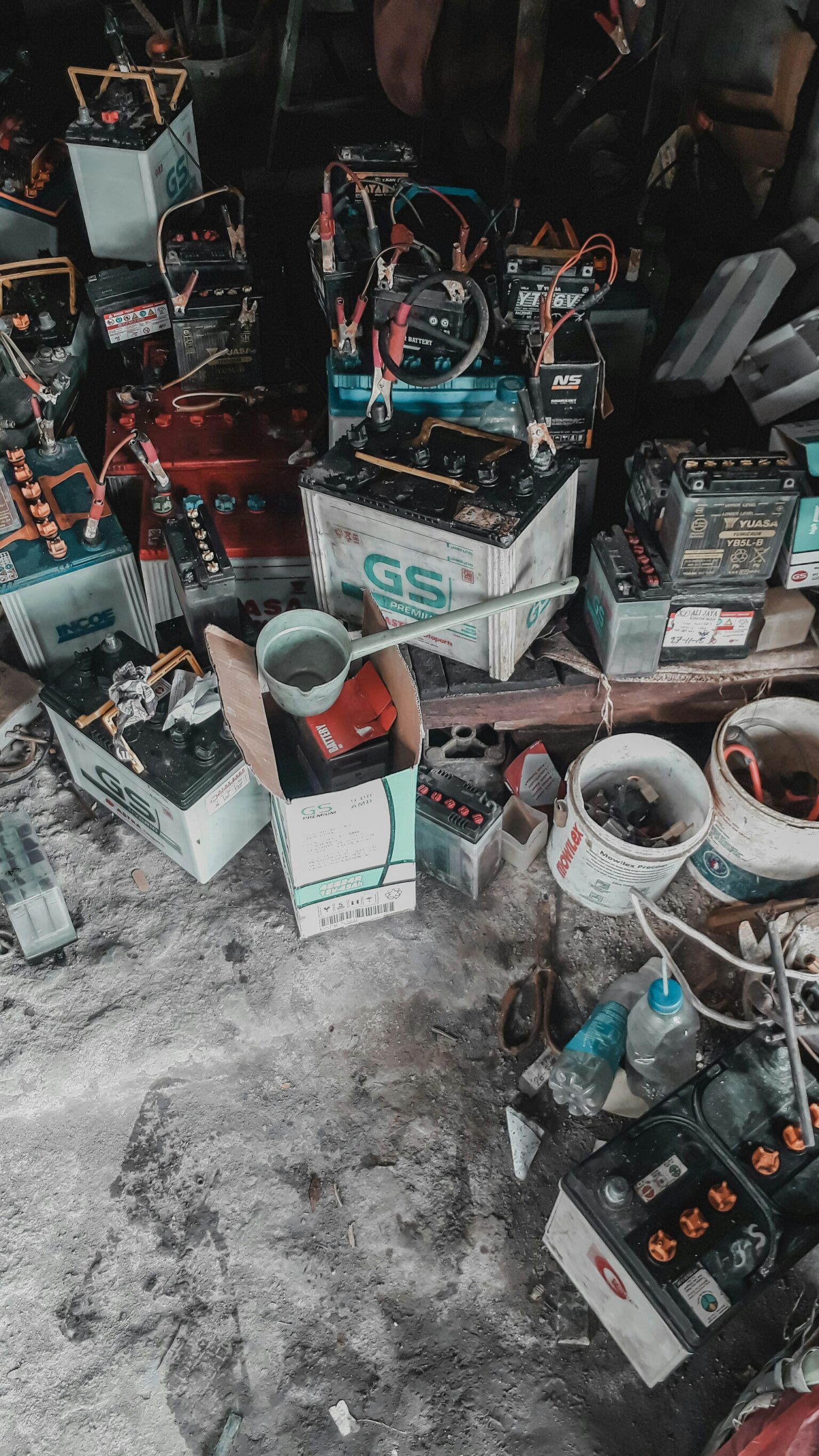
The European Commission has approved, without conditions, the acquisition by Clarios of three lead recycling plants from Ecobat located in Germany and Austria. The decision, adopted under the EU Merger Regulation, confirms that the transaction does not raise competition concerns across the European Economic Area.
The deal involves secondary lead smelters in Braubach and Freiberg in Germany, as well as Arnoldstein in Austria. These facilities currently recycle used lead-acid batteries into secondary lead and related materials, supplying both Clarios and other battery manufacturers. With this acquisition, Clarios further strengthens its vertically integrated model, expanding its control over upstream recycling inputs that are essential for battery production.
The Commission’s assessment focused on several interrelated markets, including the supply of secondary lead and lead alloys, tolling services for battery recycling, the procurement of scrap lead-acid batteries, and the downstream market for automotive lead-acid batteries. The transaction presented both horizontal overlaps, particularly in the sourcing of scrap batteries in Germany and Austria, and vertical links between recycling activities and battery manufacturing.
Despite these overlaps, the Commission concluded that the transaction would not significantly impede effective competition. A central consideration was the continued availability of recycled lead for competing battery manufacturers. Even if Clarios were to internalise a larger share of the output from the acquired plants, the investigation found that sufficient alternative smelters would remain active in the market, ensuring continued access to key inputs.
The Commission also examined the role of tolling services, where recycling is performed on behalf of customers for a fee. It found that such services represent only a limited share of supply for battery manufacturers and that credible alternatives would remain available across Central Europe. As a result, the transaction is unlikely to restrict competitors’ ability to secure necessary recycling capacity.
On the upstream side, concerns that independent smelters might lose access to customers were similarly dismissed. Even in a scenario where Clarios reduces its reliance on third-party recycled lead, other smelters would continue to serve a sufficiently broad customer base. Likewise, the Commission determined that Clarios would have no economic incentive to reduce its purchases of scrap batteries, as maintaining supply flows is essential to its integrated production model. Scrap suppliers, for their part, would continue to have access to alternative buyers, including smelters in neighbouring countries.
The decision highlights the Commission’s continued acceptance of vertical integration in industrial sectors where input markets remain sufficiently competitive. In this case, the presence of alternative suppliers and the relatively fragmented structure of upstream markets played a key role in alleviating concerns about foreclosure or input restriction strategies.
Clarios, headquartered in Germany, is a major supplier of automotive lead-acid batteries in Europe, serving both original equipment manufacturers and the aftermarket. Its operations already include recycling facilities in Germany and Spain, where used batteries are processed into secondary lead for internal use. The acquisition of Ecobat’s plants further consolidates this closed-loop model. Ecobat’s German and Austrian operations, by contrast, have traditionally supplied recycled materials to a broader range of battery producers.
The transaction was notified to the Commission on 4 March 2026 and cleared within the standard Phase I review period. The case illustrates the Commission’s broader approach to merger control, where most transactions are approved following an initial assessment unless clear risks to competition emerge. In this instance, the investigation confirmed that market structure and supply alternatives are sufficient to prevent any significant harm to competition, allowing the deal to proceed without remedies.
