
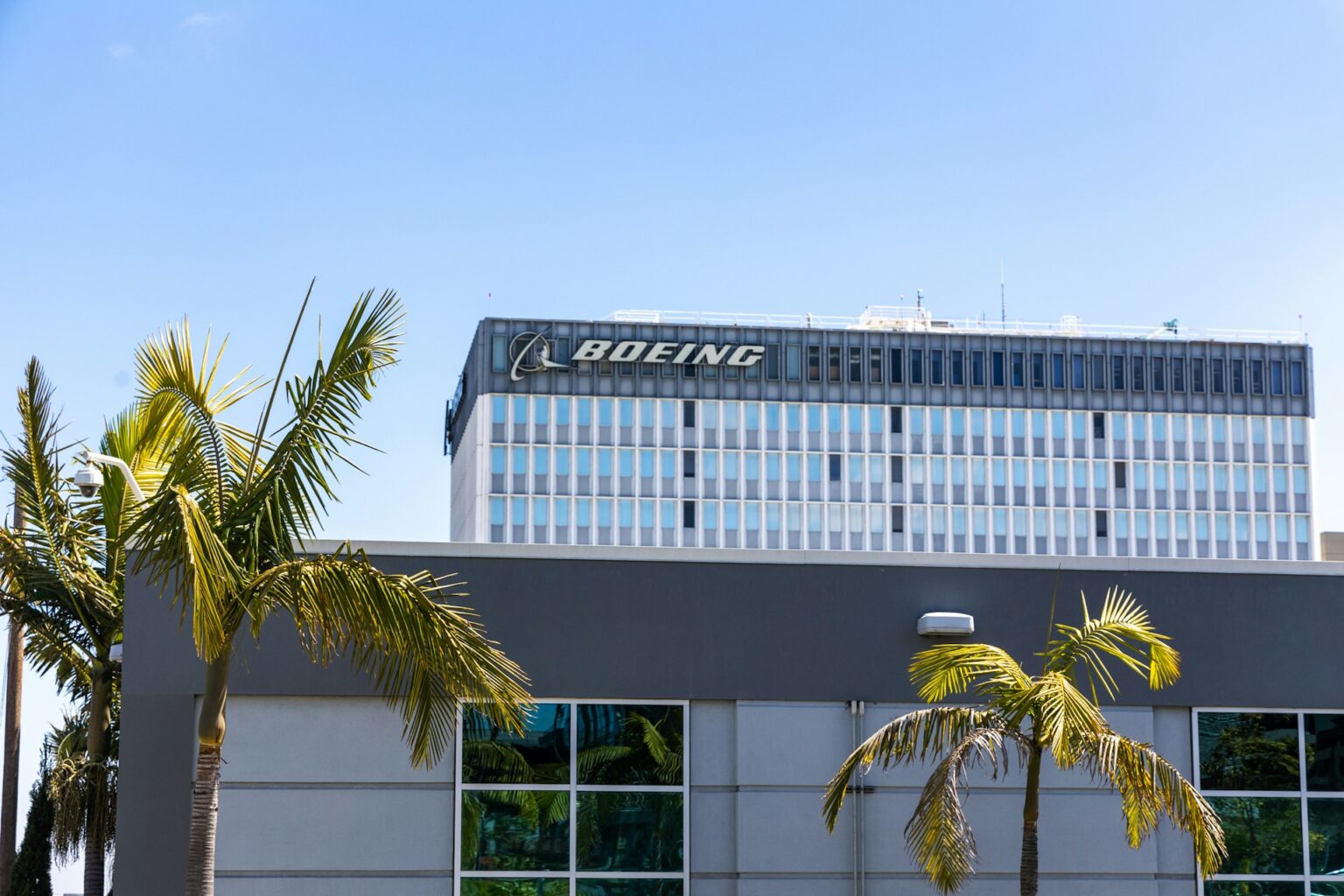
Boeing has announced that it expects to complete its proposed $4.7 billion acquisition of Spirit AeroSystems by the end of the year, following conditional approval from the U.S. Federal Trade Commission (FTC). The regulator has authorized the transaction on the basis that Boeing and Spirit carry out a series of divestitures aimed at mitigating competition concerns in both the commercial aviation and defense sectors.
The FTC’s order requires Spirit to divest several operations—most notably facilities in North Carolina and Belfast, Northern Ireland—to Airbus, under an agreement that had largely been negotiated between the companies in advance. Spirit must also sell its Subang, Malaysia, operations, which supply components to both Boeing and Airbus. A sale to Composites Technology Research Malaysia was reached earlier in 2025. In total, the broader transaction involving Boeing, Airbus, and associated asset transfers is valued at approximately $8.3 billion.
Boeing’s shares fell by 3.1% following the announcement, while Spirit AeroSystems’ shares rose 3.5%, reflecting investor reactions to the FTC’s decision and the anticipated restructuring of the aerostructures manufacturer.
Spirit AeroSystems—formerly part of Boeing until its spin-off in 2005—has faced significant financial and operational challenges in recent years. Production issues at Spirit have contributed to delays on several major aircraft programs, including Boeing’s 737 and Airbus’ A350 and A220. Boeing is seeking to regain control of key fuselage and wing production in an effort to stabilize output, particularly for the 737 program.
The Belfast operation, which Airbus will assume full control over, has been one of Spirit’s most troubled assets. The historic former Short Brothers facility reported losses of roughly $670 million in 2024 and warned earlier this year that it required additional capital to meet upcoming financial obligations. As part of the transaction, Airbus will receive a $439 million payment to offset the losses it is expected to absorb.
In the defense sector, the FTC has imposed safeguards to ensure that the merger does not reduce competition for future military aircraft programs. Spirit will be required to continue supplying Boeing’s competitors where relevant, including manufacturers pursuing next-generation fighter contracts. Boeing won the U.S. military’s first sixth-generation fighter program, the F-47, earlier this year and is currently bidding for the U.S. Navy’s F/A-XX program.
To oversee the implementation of the divestiture commitments and ensure compliance, the FTC’s proposed order provides for the appointment of two independent monitors—one reporting to the FTC and another representing the U.S. Department of Defense.
A Boeing spokesperson welcomed the FTC’s approval and reaffirmed the company’s commitment to completing all remaining steps necessary to finalize the acquisition. Spirit AeroSystems likewise confirmed that it expects the deal to close by the end of December.
Boeing’s reacquisition of Spirit marks a significant realignment within the global aerostructures industry and underscores the strategic importance of securing and stabilizing critical elements of the 737 supply chain. The outcome of the transaction is expected to have lasting implications for both commercial aircraft manufacturing and defense procurement in the United States and Europe.