
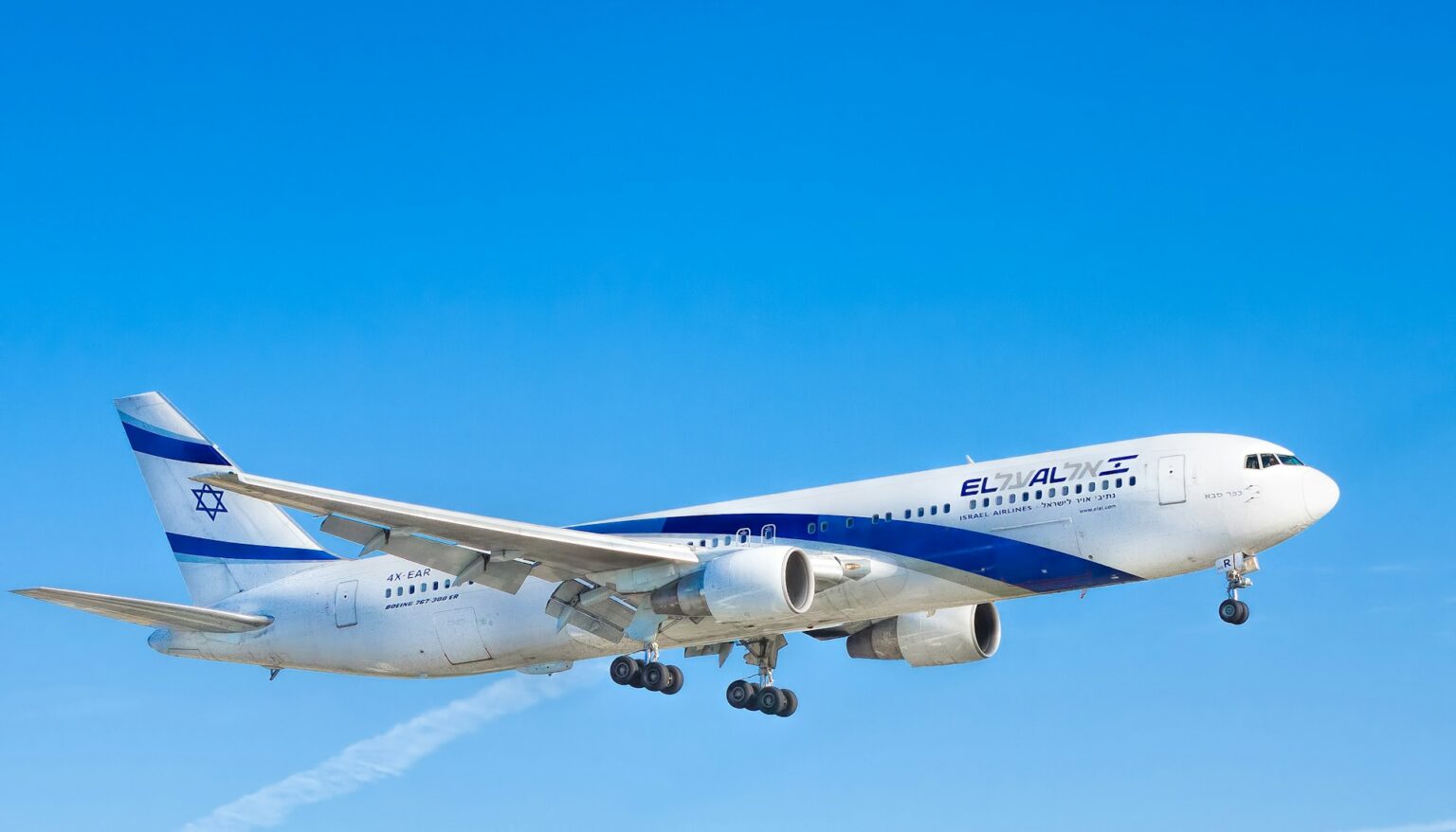
Israel’s national carrier, El Al Airlines, is facing a potential financial sanction of up to NIS 121 million (approximately $39 million) after the Israel Competition Authority (ICA) alleged that the airline abused its monopolistic position by charging “excessive and unfair” airfares during the war with Hamas in Gaza. (Times of Israel).
The competition watchdog announced on Sunday that it has formally notified El Al of its intention to impose the maximum fine permitted under Israeli law. The decision is not yet final and remains subject to a hearing in which El Al will be allowed to present its arguments.
According to the ICA, the outbreak of hostilities on October 7, 2023, led to a sharp reduction in international air services to and from Israel, as many foreign airlines suspended operations due to heightened security risks. As a result, El Al became the dominant, and in many cases sole, provider on key international routes.
The authority’s investigation found that between October 2023 and the end of May 2024, El Al held a monopoly on at least 38 of the 53 routes it operated, including major destinations such as London, New York, Paris, Bangkok, Tokyo, and Los Angeles. During this period, the airline’s share of passengers traveling to and from Israel surged from roughly 20% before the war to more than 70% within days of its outbreak, remaining above 50% throughout the initial months of the conflict.
Based on an analysis of millions of tickets sold during the war period and a comparison with prices charged in the preceding year, the ICA concluded that El Al raised ticket prices by an average of approximately 16%. On certain routes, price increases reached as high as 31%. The investigation further determined that even on flights where economy-class seats were not fully booked, ticket prices increased by around 25%.
ICA Chair Michal Cohen described the circumstances as creating an “extreme situation for the traveling public,” noting that widespread flight cancellations by foreign carriers left many consumers with little choice. “The entire period was characterized by instability and a need for certainty in the ability to fly,” the authority stated. According to the ICA, passengers often felt compelled to accept El Al’s prices out of concern that alternative flights would be canceled, while others were forced to forgo travel altogether.
During the prolonged period of reduced competition, El Al reported record profits, benefiting from constrained supply and sustained demand for international travel from Israel.
El Al has firmly rejected the allegations, disputing both the ICA’s findings and their legal implications. In a statement, the airline argued that even if an average price increase of 16% were accepted—which it contests—there is no legal precedent for classifying such an increase as excessive pricing under competition law. The company stated that it intends to present its full position at the upcoming hearing and in any relevant legal forum, expressing confidence that its arguments will prevail.
The ICA’s determination could have broader legal consequences beyond the administrative fine. Tal Rotman, an attorney at the Pearl Cohen law firm representing plaintiff Ilan Verednikov in a class action lawsuit against El Al, said that an official finding of abuse of dominance would constitute prima facie evidence in the civil proceedings. Such a determination, he noted, could facilitate approval of the lawsuit as a class action and potentially lead to substantial compensation for affected customers.